

If you’ve ever tried to brush your toddler’s teeth, you already know how it goes. One second you’re gently approaching with a toothbrush, and the next you’re negotiating with a tiny human who has somehow turned a two-minute task into a full-blown standoff. You’re not alone in this, and honestly? This one comes up in almost every new patient appointment.
Here at SoCal Pediatric Dentistry, this is exactly the kind of stuff we love talking through with families. Our pediatric services are rooted in education and prevention because we genuinely believe that what happens at home matters just as much as what happens in our chair. Building healthy habits early is the foundation of a lifelong smile, and that starts with getting through brushing time without tears from everyone involved.
Why Brushing Matters This Early
It might be tempting to think that baby teeth are just placeholders, so why fight so hard over them? But the truth is, those little teeth do a lot of important work. According to the CDC, cavities are the most common chronic disease of childhood in the United States, and more than half of children aged 6 to 8 have already had a cavity in at least one of their baby teeth. That’s a big deal, and it’s almost entirely preventable.
Baby teeth guide permanent teeth into place, support speech development, and allow kids to chew and eat comfortably. When decay sets in early, it can cause pain and infections and even affect how well a child eats, speaks, and learns. This is one of the reasons I’m so passionate about infant oral health education and why I encourage parents to start oral care before there’s even a tooth in sight.
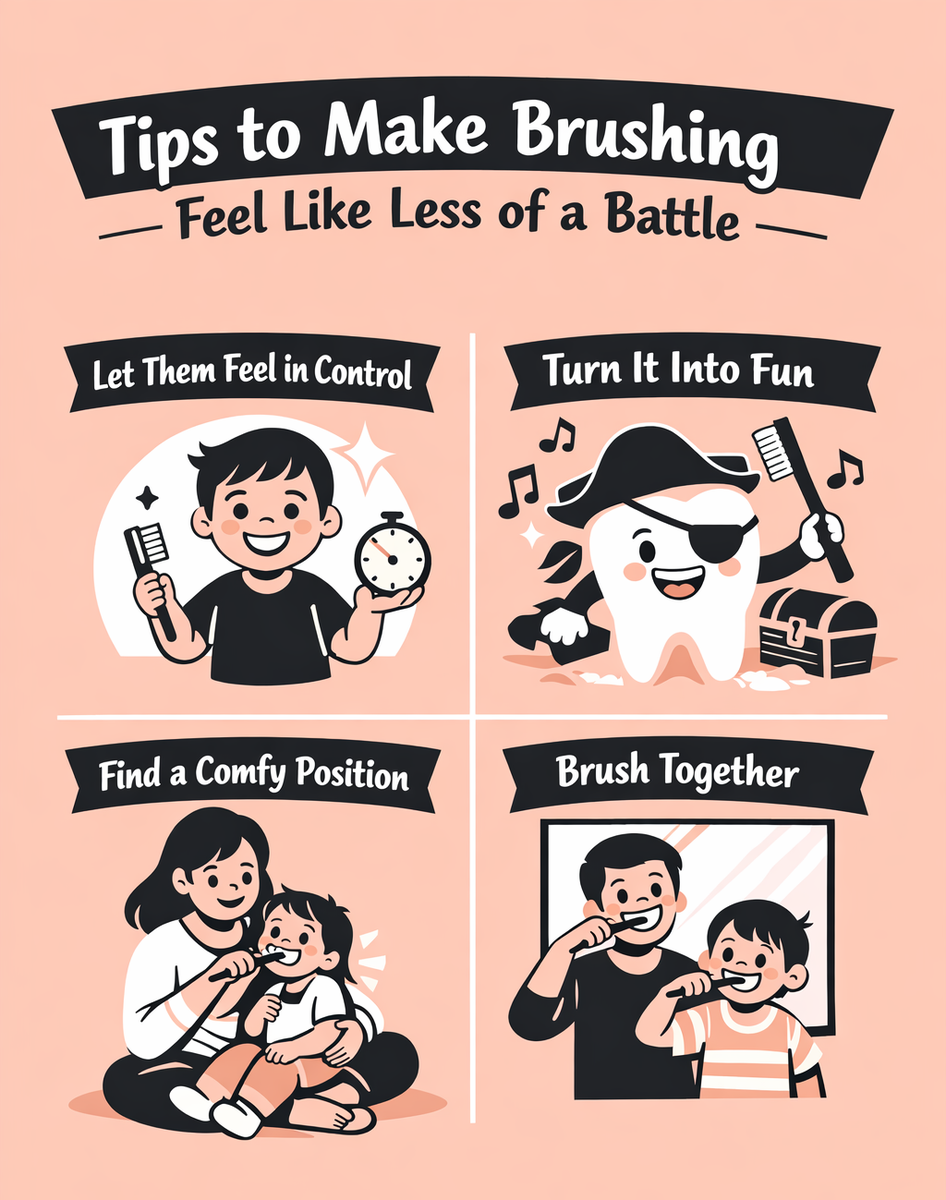
Making Brushing Feel Like Less of a Battle
There’s no single trick that works for every toddler, but there are a handful of approaches that consistently make a difference. Try a few of these and see what clicks for your child.
1. Let Them Feel in Control
Toddlers resist things they feel are being done to them. One of the easiest shifts you can make is giving your child some ownership over the process. Let them pick out their toothbrush at the store. Let them choose between two flavors of toothpaste. After you’ve completed a thorough brushing and flossing, give them a chance to practice on their own so they feel involved and build confidence. These small choices go a long way in reducing resistance because now it’s theirs, not just something you’re making them do.
2. Turn It Into Something Fun
I know it sounds too simple, but it works. Play a silly two-minute song, make up a brushing character, let your toddler brush a stuffed animal’s “teeth” while you brush theirs. Narrate the whole thing like you’re announcing a very important event. The more you can make brushing feel like playtime instead of a chore, the less pushback you’ll get. Kids this age are wired to learn through play, so lean into it.
3. Find a Position That Works for Both of You
Positioning actually makes a huge difference. For young toddlers, try sitting cross-legged on the floor and laying them in your lap with their head near your knees. This gives you a clear view of all their teeth and keeps things stable, which means less wiggling and a more thorough brush. Some families do this standing at the bathroom counter with the child leaning back slightly. Find what works for your household and stick with it so it becomes routine.
4. Brush Together
Kids are natural imitators, and one of the best things you can do is brush your teeth alongside them. When they see that this is something the whole family does, it stops being a battle and starts being just part of the routine. Research consistently shows that children mirror the oral health habits of their parents, so modeling matters more than you might think.
When to Bring Your Child In
The American Academy of Pediatric Dentistry recommends a child’s first dental visit by their first birthday or within six months of their first tooth coming in, whichever comes first. I know that can feel early, but these visits aren’t about anything scary. They’re about getting your child comfortable in the chair, letting me take a look at their development, and giving you a chance to ask every question you’ve been holding onto, including the brushing ones.
Early visits also help us spot any areas of concern before they become bigger problems, and I get to connect with your child in a positive, low-pressure setting. That matters a lot for building trust, especially when they’re little.
Let’s Make Brushing (and Everything Else) Easier at SoCal Pediatric Dentistry
At SoCal Pediatric Dentistry, we’ve built this practice around one simple idea: every child deserves a dental experience that feels warm, safe, and even a little fun. I completed my specialty training in pediatric dentistry at New York University College of Dentistry and have since become a Diplomate of the American Board of Pediatric Dentistry. From infants to adolescents, including children with special needs, our entire approach is centered on meeting kids exactly where they are and supporting parents every step of the way.
Whether you’re dealing with a toddler who turns brushing into a dramatic production or you just want to make sure you’re doing everything right, we’re here for all of it. Contact our office to schedule your child’s next visit, and let’s keep those little smiles sunny in SoCal.