

Those tiny teeth poking through your baby’s gums are doing a lot more than giving you something to smile about. Baby teeth are active players in how your child learns to talk, eat, and grow, and keeping them healthy is one of the most important things you can do in the early years.
At SoCal Pediatric Dentistry in Torrance, we love helping South Bay families understand the full picture of their child’s oral health. Our goal is to provide families like yours with the knowledge, support, and guidance you need to help your children maintain healthy smiles. We strive to create a welcoming environment where both children and parents feel comfortable, informed, and cared for at every visit.
Baby Teeth Do More Than You Think
It’s easy to assume that primary teeth are temporary and therefore less important than permanent ones. In reality, baby teeth serve several foundational roles that shape how your child develops physically, from how they chew nutritious foods to how their jaw and facial structure take form over time.
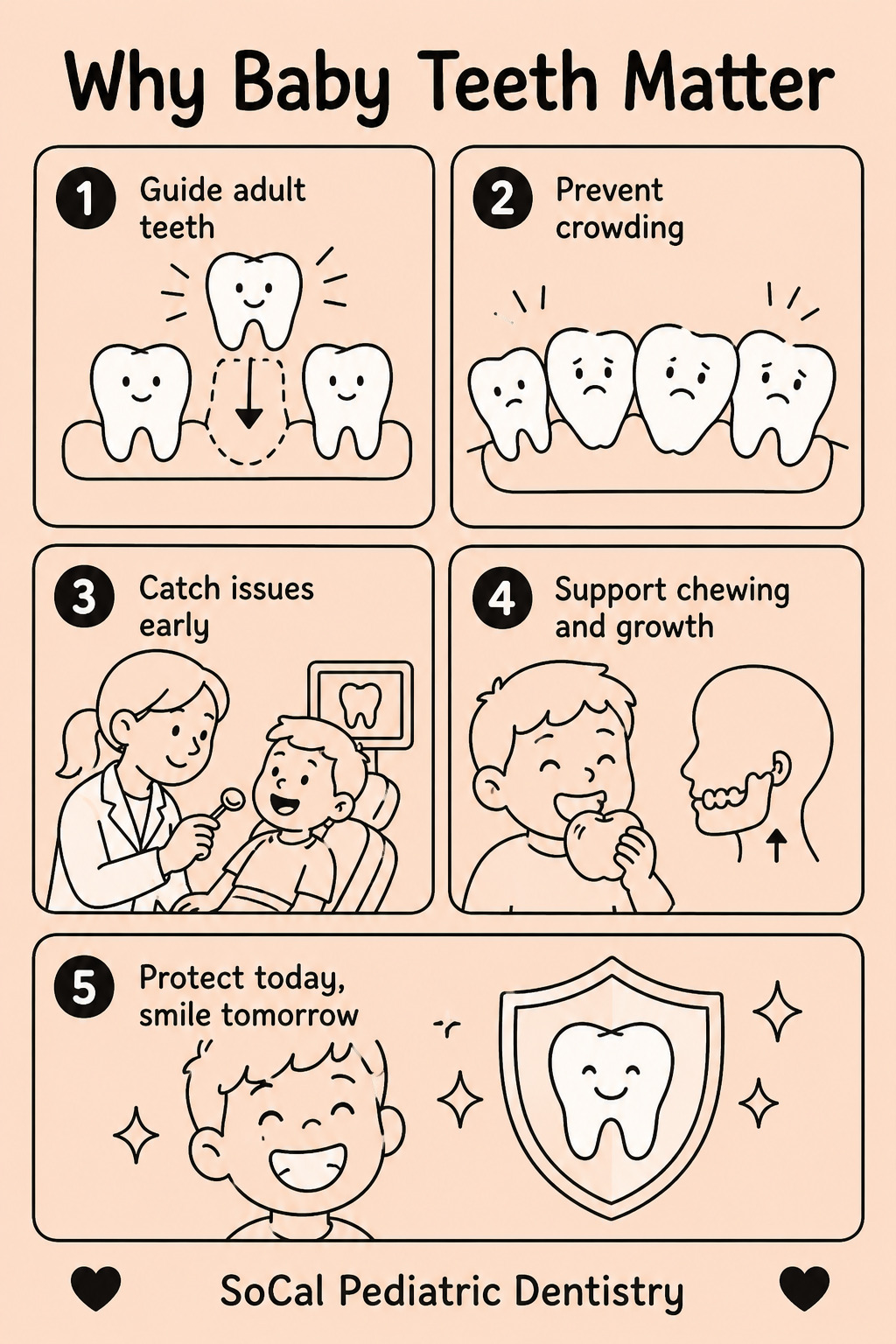
One of the most critical functions of baby teeth is guiding permanent teeth into position. When a primary tooth is lost too early due to decay or injury, neighboring teeth can shift into the empty space, leading to crowding or alignment problems that are much harder to address later on. The pediatric dental services we provide at SoCal Pediatric Dentistry are designed to catch these issues early, long before they become bigger concerns.
The Connection Between Baby Teeth and Speech
This is something that genuinely surprises many parents: your child’s teeth are physical tools for making sounds. The tongue uses the upper front teeth as a contact point when forming sounds like “th,” “s,” “f,” and “v.” Without those teeth in place, the tongue lacks the structure it needs to produce these sounds correctly.
The American Academy of Pediatric Dentistry notes that baby teeth help children speak clearly and chew naturally, two functions most parents associate with permanent teeth, but that begin developing much earlier. When front teeth are lost prematurely, often due to early childhood cavities, some children develop compensatory speech patterns that can stick around even after adult teeth come in.
When Speech Patterns Are Worth a Closer Look
Parents sometimes notice a lisp or unclear pronunciation and assume it will work itself out. Some speech quirks do resolve on their own, but others are directly tied to what’s happening inside the mouth. If your child is consistently missing certain sounds or if speech seems to be going backward rather than forward, a dental evaluation is a reasonable first step. We take these concerns seriously and will always let you know if anything we see could be contributing to what you’re hearing.
The Window When It Matters Most
Between ages two and five, children are rapidly expanding their ability to produce new sounds. This is also the window when baby teeth are most fully erupted and most actively supporting speech development. Healthy teeth during this period give children the best possible foundation for clear, confident communication that carries into school and beyond.
How Oral Health Shapes Overall Development
The connection between a child’s mouth and their broader growth extends well past speech. Healthy baby teeth allow children to bite and chew a full range of foods, which directly supports nutrition, brain development, and physical growth. Pain from untreated decay, on the other hand, can disrupt sleep, make eating uncomfortable, and affect a child’s ability to focus at school.
We encourage families to establish care early and get comfortable with what routine visits look like. Knowing what to expect at your first visit helps take the mystery out of the experience and sets the tone for a lifetime of positive dental moments. If your child experiences a dental accident like a knocked-out or chipped tooth, knowing that pediatric dental emergencies can affect speech and development when left unaddressed makes acting quickly even more important. Prompt care can protect not just the tooth but everything it supports.
Here are some of the key roles baby teeth play that are easy to overlook:
- Speech sound formation: Front teeth serve as a physical guide for the tongue when forming certain consonant sounds
- Space holding: Primary teeth reserve room in the jaw so permanent teeth can erupt in the right position
- Chewing and nutrition: Healthy teeth allow children to eat a varied, nutrient-rich diet that fuels development
- Jaw and facial growth: The presence and use of baby teeth actively shape the developing jaw and facial structure
Protecting these functions starts with consistent preventive care and a dental home your child feels comfortable in.
Schedule a Visit With SoCal Pediatric Dentistry
At SoCal Pediatric Dentistry, we care for children from infancy through adolescence, including those with special needs. Dr. Bri is a Diplomate of the American Board of Pediatric Dentistry with a DDS from USC and pediatric residency training from NYU College of Dentistry. She has also served communities in need, bringing her commitment to children’s health well beyond the practice’s walls. We pride ourselves on creating an experience that feels warm, fun, and genuine for every family we serve.
We accept most PPO insurance plans and offer a membership program for families without insurance, so quality care is within reach for everyone in the South Bay. Whether your child is due for a routine cleaning or you have questions about their speech or development, we are here and happy to help. Contact our office to schedule your child’s appointment today.