

It’s one of those questions almost every parent asks at some point: “If that tooth is just going to fall out anyway, why treat it?” It makes total sense to wonder. Baby teeth are temporary, so treating decay in them can feel unnecessary. But the reality is, some baby teeth don’t fall out until around age 12, and the timing of when a tooth is lost matters more than most people realize. An untreated cavity in a primary tooth can lead to discomfort, infection, and even affect how the adult teeth develop and come in.
Here at SoCal Pediatric Dentistry, we talk with parents about this all the time. Our pediatric dental services are designed to be as conservative and kid-friendly as possible, and we always explain the “why” behind every recommendation. When I suggest a filling, there’s a clear reason for it, and we want you to feel confident in that decision.
Why Baby Teeth Matter More Than You Might Think
Baby teeth are not just placeholders. They serve several important functions in your child’s development, from helping them chew food properly to supporting clear speech patterns. Perhaps most importantly, they hold space in the jaw for the permanent teeth that will follow.
When a baby tooth is lost too early due to untreated decay, the surrounding teeth can drift into that open space. This shifting can cause crowding or misalignment in the permanent teeth, sometimes requiring orthodontic treatment down the road. Some baby teeth stay in place until a child is 11 or 12 years old, which means a cavity left untreated in a 4-year-old could cause problems for years.
What Happens When Decay Goes Untreated
Small cavities can progress quickly in children, particularly because the enamel on baby teeth is thinner than on adult teeth. A cavity that looks minor today can reach the tooth’s nerve in a relatively short time, causing pain, infection, and the need for more involved treatment, such as pulp therapy. According to the American Academy of Pediatric Dentistry, early childhood caries is a significant chronic disease carrying consequences beyond the teeth themselves, including loss of school days and diminished quality of life.
Treating decay early with a simple filling is far less involved for your child than waiting until a larger problem develops. We know dental anxiety is real for little ones, and keeping appointments short and straightforward is always the goal.
Signs Your Child May Have a Cavity
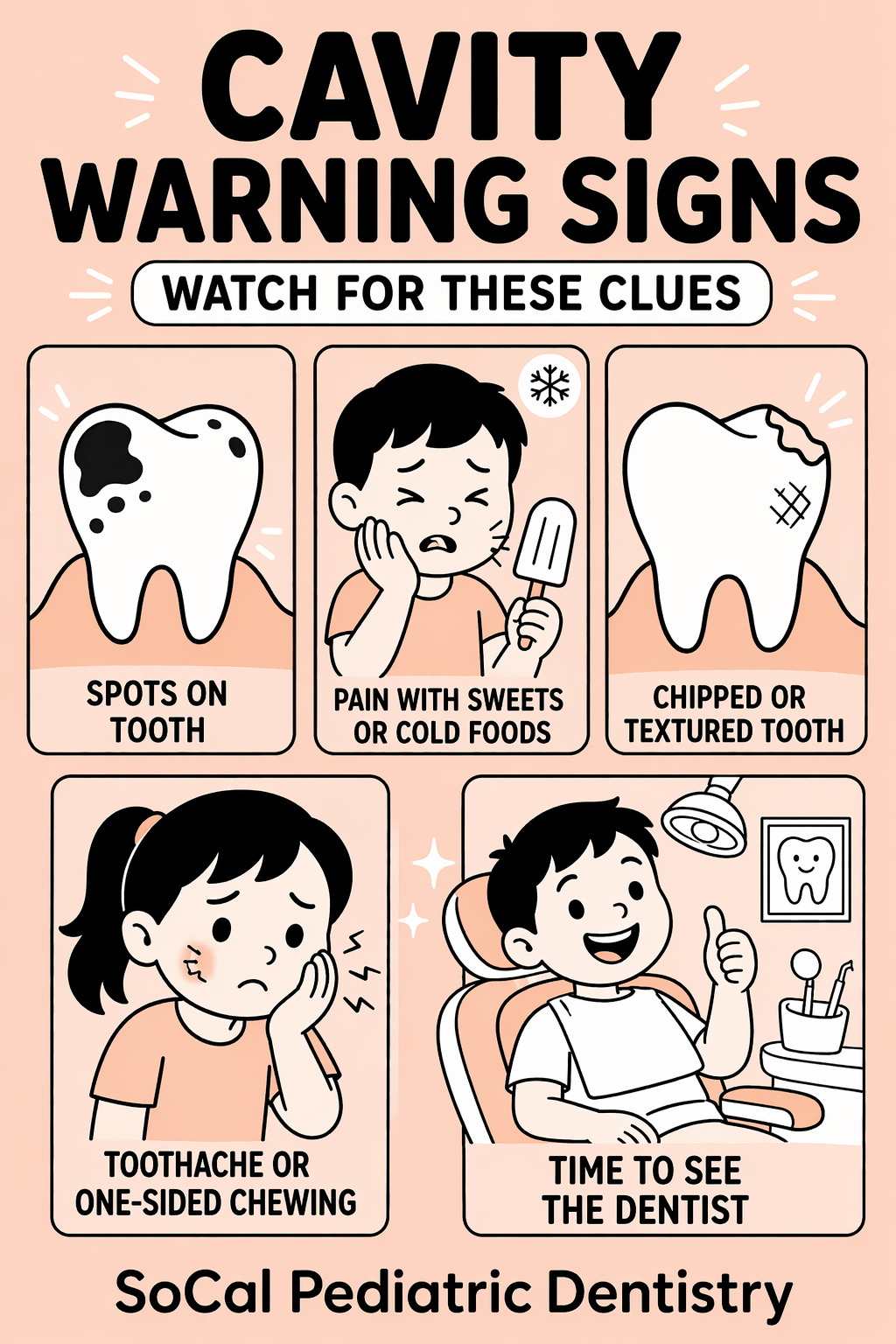
It’s worth knowing what to look for between visits so you can catch things early. Here are some common indicators:
- Visible white, brown, or black spots on a tooth
- Sensitivity or pain when eating sweet, cold, or hot foods
- A tooth that appears chipped or has an unusual texture
- Your child is complaining of a toothache or avoiding chewing on one side
These signs don’t always mean a filling is needed, but they are good reasons to schedule a visit sooner rather than later. Understanding the basics of your child’s dental development is part of what we cover during every first visit at our office.
What to Expect During the Filling Appointment
At SoCal Pediatric Dentistry, we only place white, BPA-free composite fillings. They blend naturally with the tooth, contain no mercury, and are safe for children of all ages. The process is straightforward: Dr. Bri gently removes the decayed portion of the tooth and fills it with a tooth-colored material, restoring function and stopping the cavity from spreading.
We also offer nitrous oxide to children who feel anxious, helping them stay calm and comfortable throughout the appointment. For families navigating concerns about pediatric dental emergencies or more complex care, we are here to walk you through every step.
Are There Any Alternatives to a Filling?
In some cases, depending on the size and location of the decay, I may discuss Silver Diamine Fluoride (SDF) as an option. SDF is a topical treatment able to arrest cavity progression without the need for drilling, making it particularly helpful for younger children or those with significant anxiety. It does cause a dark discoloration in the treated area, so we always explain this to families before recommending it.
For very small, early-stage cavities, a watchful waiting approach combined with improved home care and fluoride treatments may also be appropriate. Every child and every tooth is different, and our goal is always to recommend the least invasive option to genuinely protect your child’s oral health. We also offer dental information resources to help families better understand their child’s care.
Schedule with SoCal Pediatric Dentistry
At SoCal Pediatric Dentistry, I focus on making each visit feel comfortable, clear, and low-stress for our patients and their families. I completed my pediatric dental residency at New York University College of Dentistry and is a Diplomate of the American Board of Pediatric Dentistry. We genuinely love what we do, and that shows in the warm, patient-centered environment we’ve created for families throughout Torrance and the South Bay.
We accept most PPO insurance plans and offer flexible financial options, including CareCredit and Sunbit, to make care accessible for every family. If your child has been told they need a filling, or if it has been a while since their last checkup, we would love to see them. Reach out to us to schedule an appointment today.