
Watching your child point to their mouth and say “it hurts” is never fun, especially when you’re not sure what’s actually going on in there. Maybe there’s a dark spot on a molar you didn’t notice before, or your child mentioned a sensitivity that wasn’t there last month. As a parent, it’s natural to wonder whether a small cavity means a quick filling or something more involved.
At SoCal Pediatric Dentistry, we get this question often, and it usually leads to a conversation about pediatric crowns. Crowns sound intimidating, but they are one of the most common and effective ways we protect a child’s tooth when a cavity has gone beyond what a filling can fix. Understanding what a crown actually does, and when we recommend one, can take a lot of the mystery out of the process for you and your child.
What Is a Pediatric Crown?
A pediatric crown is a small cap that fits over a child’s tooth, covering it completely to protect what remains of the natural structure underneath. Think of it as a protective shell that restores the shape, strength, and function of a tooth that has been weakened by decay or damage. Unlike a filling, which patches a specific area, a crown wraps around the entire visible portion of the tooth.
Most of the crowns we place are stainless steel, a material used safely in pediatric dentistry for decades. According to the American Academy of Pediatric Dentistry, stainless steel crowns are durable, relatively inexpensive, and minimally sensitive to placement technique, which makes them a dependable choice for restoring baby teeth. We also offer more tooth-colored options when appearance is a bigger priority for a family, especially for front teeth.
When a Crown Becomes Necessary
Not every cavity needs a crown. Many small areas of decay respond well to a dental filling, and we always start with the most conservative option that properly protects the tooth. Crowns come into the picture when the decay has spread too far, or when the tooth has been weakened in a way a filling cannot fully address.
We typically recommend a crown when a cavity covers multiple surfaces of a tooth, when there isn’t enough healthy structure left to support a filling, or when a large filling has already failed. Crowns are also the standard next step after we perform pulp therapy, sometimes called a baby root canal, since the tooth needs extra reinforcement once the inner pulp has been treated. A cracked or fractured tooth, or one that formed with a developmental defect, may also need a crown to hold everything together until the tooth is naturally lost.
Here’s a quick look at the most common reasons we place a crown:
- Decay covering two or more surfaces of a tooth
- Following pulp therapy (baby root canal)
- A tooth with insufficient structure to hold a filling
- A cracked, fractured, or developmentally weak tooth
- A previous filling that has failed or come loose
Once we’ve identified that a crown is the right call, we walk you and your child through exactly what to expect so nothing feels like a surprise on treatment day.
What to Expect During the Crown Placement Appointment
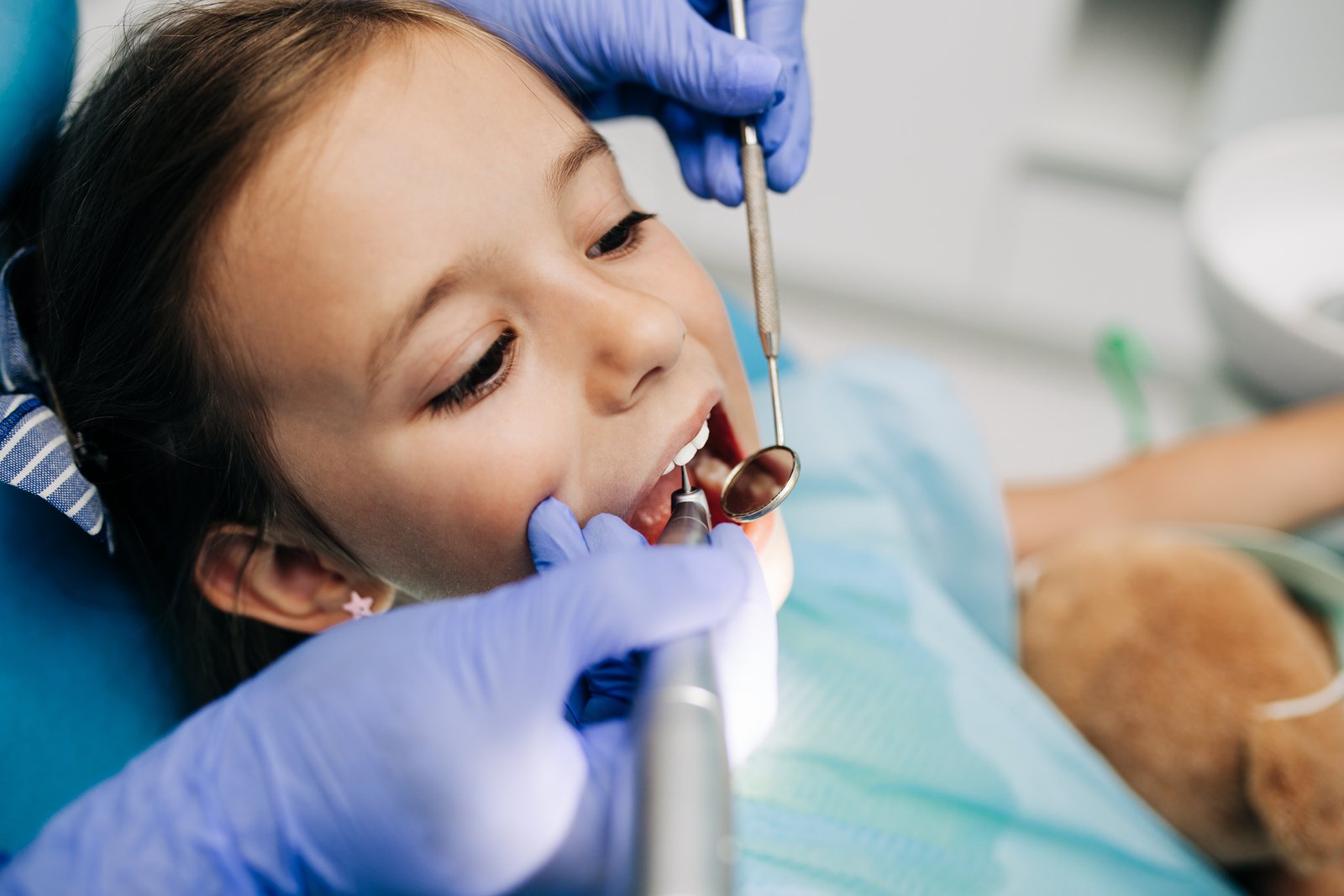
We know that hearing “your child needs a crown” can sound bigger than it actually is, so we like to explain the process in simple terms. After we numb the area so your child stays comfortable, we gently shape the tooth to make room for the crown. From there, we select a properly sized crown, fit it over the tooth, and cement it securely in place.
We typically complete the entire process in one visit, which we know matters to busy families. No lab work is required, and no second appointment to wait for. Because we work exclusively with children, from infants through adolescence, including kids with special needs, we’ve built our whole approach around keeping this experience calm and manageable. Our office feels more like a bright, welcoming space than a clinical one, and that goes a long way toward helping kids feel at ease during a procedure that might otherwise feel scary.
Caring for Your Child’s Crown at Home
Once a crown is placed, caring for it is refreshingly simple. Your child brushes and flosses as usual, and the crown holds up well under normal chewing and daily wear. The crown will naturally come out along with the baby tooth when it’s ready to fall out, so there’s nothing extra you need to do to prepare for that transition.
Regular checkups still matter here. During your child’s routine dental exam, we make sure the crown is holding steady and that everything around it looks healthy. If your child still needs extra protection against future decay, we may also talk with you about options like fluoride treatment or dental sealants on other teeth to help prevent the need for additional restorative work down the road.
Let’s Keep Your Child’s Smile Healthy and Protected at SoCal Pediatric Dentistry
A pediatric crown might sound like a big deal at first, but it’s really just one more tool we use to make sure your child’s smile stays healthy while their teeth do the important work of guiding growth and development. Whether your child needs a crown after a cavity, a baby root canal, or a weak tooth, our goal is always the same: protect the tooth, keep your child comfortable, and help them feel good about coming to see us.
If you’ve noticed a concern with your child’s tooth or you’re not sure whether it’s time for a checkup, we’d love to see you at SoCal Pediatric Dentistry. Our team is here to keep things Sunny and Smiling in SoCal, one visit at a time. You can reach out anytime through our contact form to schedule a visit, and we’ll take it from there together.